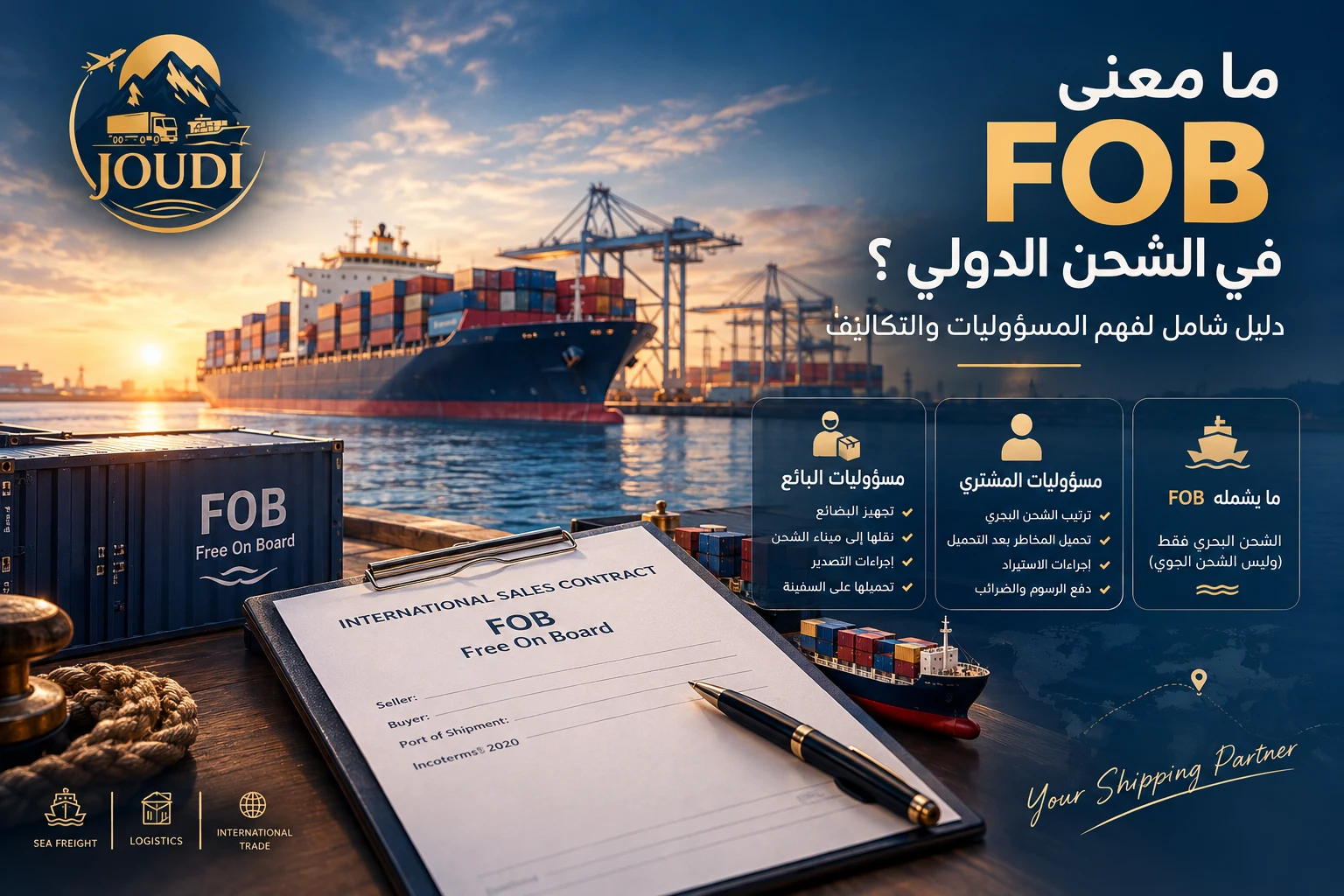
What Does FOB Mean in Shipping?
FOB (Free On Board) is an international trade term that defines the responsibilities of buyers and sellers for delivery, shipping costs, and risks during transportation.
Under Incoterms® 2020, FOB is used for sea and inland waterway transport. The seller delivers the goods by loading them on board the vessel nominated by the buyer at the agreed port of shipment.
What Are the Seller's and Buyer's Responsibilities?
Seller's responsibilities:
- Preparing and packaging the goods.
- Transporting goods to the port of shipment.
- Completing export customs formalities.
- Loading goods on board the vessel.
Buyer's responsibilities:
- Arranging and paying for sea freight.
- Assuming risks after the goods are loaded on board.
- Completing import customs clearance.
- Paying applicable import duties and taxes.
FOB does not require either party to purchase cargo insurance, although the buyer may choose to arrange coverage.
What Is the Difference Between FOB and CIF?
Under FOB, the buyer arranges and pays for the main sea freight.
Under CIF, the seller pays for sea freight and obtains the insurance required by the rule. However, under both terms, risk transfers to the buyer when the goods are loaded on board the vessel at the port of shipment.
Is FOB Suitable for Every Shipment?
Not always. FOB is intended for sea and inland waterway transport. For containerized shipments handed over to a carrier before loading on board, FCA (Free Carrier) may be more appropriate.
Choosing the correct shipping term helps businesses clarify responsibilities and avoid unexpected costs.
How Can Joudi Cargo Help?
Understanding shipping terms is essential for planning costs and managing international shipments efficiently.
Contact Joudi Cargo to discuss your shipping requirements and explore logistics solutions suited to your cargo and destination.
Disclaimer: This article provides general information only. Always verify the applicable contract terms and shipping requirements before finalizing a transaction.