Safaga customs clearance for UAE land shipments happens when your truck or container arrives at Safaga port in Egypt. It usually gets there by road through Saudi Arabia, then the Duba–Safaga ferry. Clearance goes smoothly when four things line up before the cargo leaves Dubai, Abu Dhabi or Sharjah: a valid ACID number from your Egyptian importer, documents shared through CargoX where required, a correct commercial invoice and packing list, and a UAE certificate of origin. Get these right and your goods can clear Safaga and move on to Cairo, Alexandria or Upper Egypt without long port delays.
How the UAE-to-Safaga Land Route Works
Many UAE exporters assume Egypt-bound cargo has to go by sea through the Suez Canal. The land route is a practical alternative, especially for general cargo, building materials, foodstuffs and factory supplies:
- UAE export: The truck or container is loaded at your warehouse or factory in Dubai, Sharjah, Abu Dhabi or the northern emirates. UAE export customs is completed before departure.
- Transit through Saudi Arabia: The truck crosses the UAE–Saudi border and travels under transit documentation to Duba port on the Red Sea.
- Duba–Safaga ferry: The truck or trailer boards the ferry and crosses to Safaga.
- Egyptian customs at Safaga: The cargo is inspected and duties and taxes are assessed. Once released, it continues to the final destination.
Each stage has its own paperwork. A mistake at the UAE end often only surfaces at Safaga, when the truck is already waiting on the quay.
Documents You Need Before the Truck Leaves the UAE
The exact list depends on the product, but most commercial land shipments from the UAE to Egypt need the following:
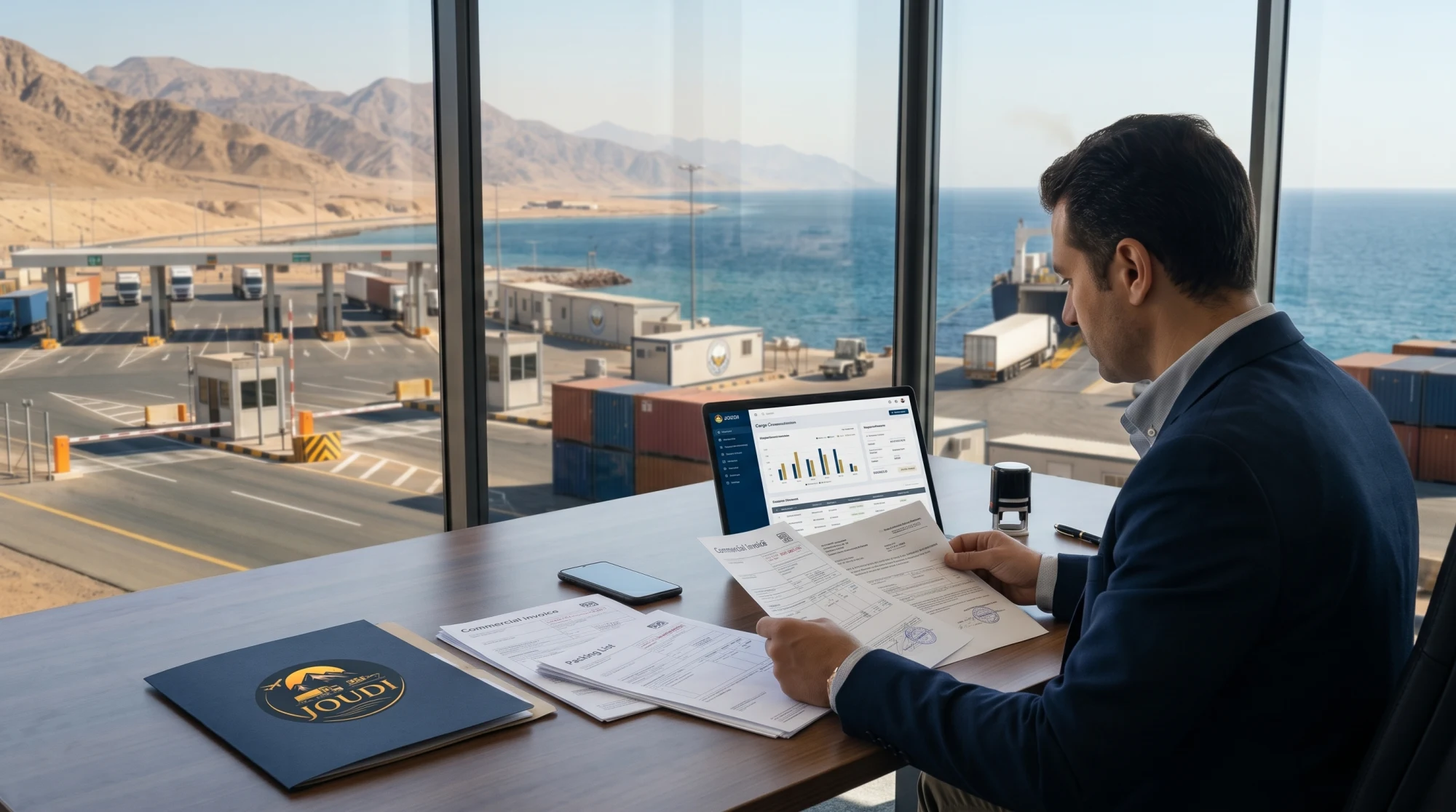
- Commercial invoice: Clear product descriptions, HS codes, quantities, unit values and the Incoterm. Vague descriptions such as "spare parts" or "mixed goods" commonly trigger inspection.
- Packing list: Weights and package counts that match the invoice exactly.
- Certificate of origin: Issued through the relevant UAE chamber of commerce, such as Dubai, Sharjah or Abu Dhabi. Goods of qualifying Arab origin may be eligible for preferential duty treatment under Arab free-trade arrangements, but only if the origin rules are met and documented properly.
- ACID number: Egypt's Advance Cargo Information system requires the Egyptian importer to register the shipment on the Nafeza platform before shipping. The UAE exporter usually needs to be registered as well.
- CargoX document upload: Under the ACID system, the exporter generally sends shipping documents electronically through the CargoX platform rather than handing over paper originals.
- Product-specific approvals: Food, cosmetics, electronics and some industrial goods may need conformity certificates or registration with the relevant Egyptian authority.
Rules change from time to time. Confirm the current requirements for your specific product with your importer and your forwarder before you book.
What Happens at Safaga Port
When the ferry docks, the cargo enters the Egyptian customs process. In general terms, it looks like this:
- Data matching: Customs checks the ACID details, CargoX documents and ferry manifest against each other. Mismatches in weight, value or description are the most common cause of holds.
- Inspection: Depending on the risk assessment, the shipment may be released on documents, X-rayed or physically inspected.
- Valuation and duties: Customs duty, VAT and other applicable fees are calculated on the declared value and the HS code. The importer, or the party agreed under the Incoterm, pays these before release.
- Release and onward delivery: Once cleared, the truck continues to the consignee.
Clearance at Safaga is normally handled by a licensed Egyptian customs broker acting for the importer. Coordinating between that broker, the UAE shipper and the trucking company is where an experienced forwarder saves days.
Common Delays and How UAE Shippers Avoid Them
Most hold-ups at Safaga trace back to issues that could have been fixed in the UAE:
- ACID not issued before loading: Never dispatch the truck until your importer confirms the ACID number is active.
- Invoice and packing list mismatches: Even small differences in gross weight or carton count can lead to inspection.
- Wrong or generic HS codes: These cause disputes over duty rates. Agree on the codes with your Egyptian importer in advance.
- Missing product approvals: Regulated goods can sit at the port while certificates are arranged.
- Ferry scheduling: Sailings between Duba and Safaga can fill up, particularly in busy seasons, so plan your loading date around the ferry.
On cost, the total depends on cargo type, truck or container size, the Saudi transit, the ferry and Egyptian clearance fees. Duties and taxes vary by product. That is why a quote in AED covering the full route is far more useful than a per-leg estimate.
Ship to Safaga with Confidence from the UAE
Joudi Cargo handles land shipments from the UAE to Egypt end to end. We load your truck or container in Dubai, Sharjah or Abu Dhabi, manage the transit through Saudi Arabia and book the Duba–Safaga ferry. We also guide you and your importer through the ACID and CargoX steps so nothing is missed at Safaga. Send us your product details, weight and destination in Egypt, and we'll come back with a clear AED quote for land container shipping to Safaga.