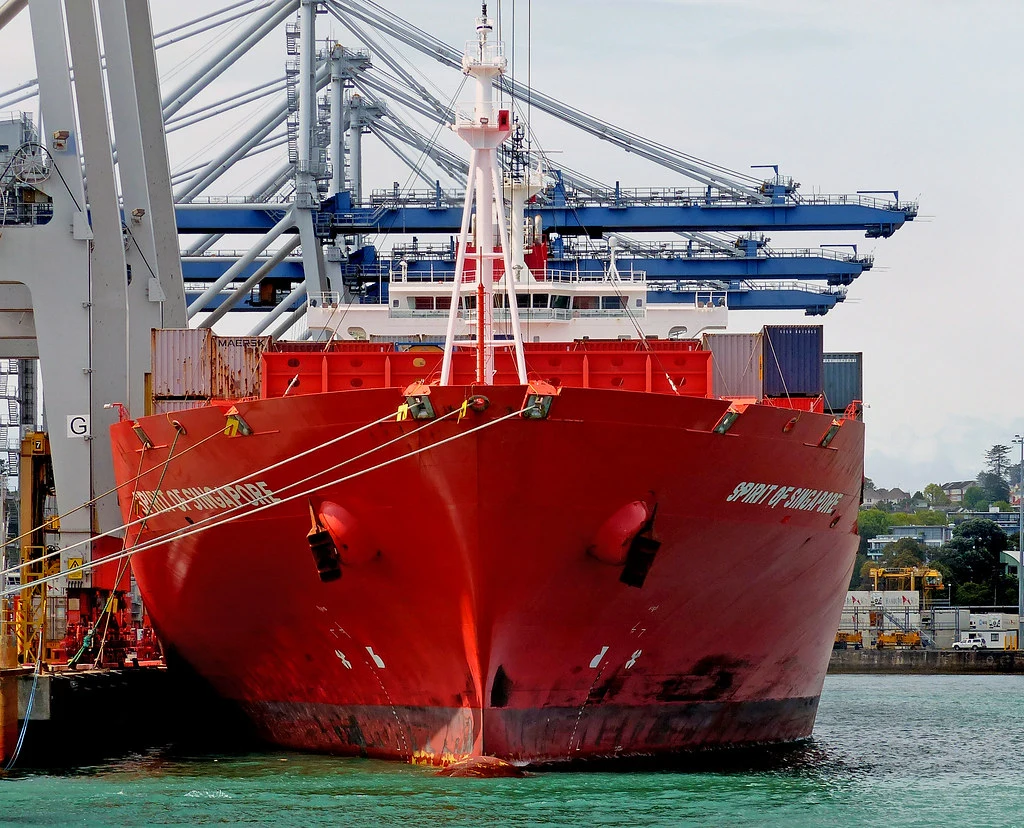
The container shipping Dubai to Egypt cost for a 40 ft container to Alexandria depends on five things. These are the ocean freight rate on the day you book, carrier surcharges (fuel, security and peak season), port and terminal charges at both ends, trucking in the UAE and Egypt, and the Egyptian duties and taxes on your goods. There is no single fixed price because rates move with season, space and routing. The most reliable number is a dated, itemised quote in AED that shows every charge separately.
The ocean freight rate and why it keeps moving
The base freight is what the shipping line charges to carry your box from Jebel Ali, or Khalifa Port if you are in Abu Dhabi, to Alexandria or El Dekheila. The vessel sails up the Red Sea and through the Suez Canal. Anything that disrupts that corridor affects your rate, including security issues, rerouting and canal-related costs.
Other things push the rate up or down:
- Capacity and demand: when ships are full, for example before Ramadan or ahead of year-end stock-ups, rates rise and space gets tight.
- Direct vs transhipment service: a direct sailing is usually faster. A transhipment via another hub can sometimes be cheaper but adds days and handling.
- Quote validity: sea freight quotes are normally valid for a short window. A price from last month may not hold today.
Surcharges that sit on top of the base rate
Many UAE shippers compare only the base freight and get surprised later. Ask whether your quote includes:
- Fuel or bunker adjustment charges
- War risk or security surcharges linked to the Red Sea route
- Peak season surcharges
- Equipment or imbalance charges when containers are scarce
Container type, weight and the cargo itself
A standard 40 ft and a 40 ft high cube are often priced close to each other. The high cube gives you extra height for light, bulky goods such as furniture, packaging or textiles. For heavy cargo, weight matters more than volume. Shipping lines and UAE road rules both set weight limits, and overweight boxes can attract extra fees or need special trucks.
Factories and suppliers moving machinery face their own costs:
- Flat rack or open top containers cost more than standard boxes, especially for out-of-gauge cargo.
- Low-bed trailers are needed to move heavy equipment from your site in Sharjah, Ajman or an industrial area in Abu Dhabi to the port.
- Lashing, securing and surveys add cost but protect expensive machinery.
- Dangerous goods such as chemicals, batteries or some paints need declarations and carry extra charges.
Costs on the UAE side and the Egypt side
In the UAE
Before your container sails, expect these items:
- Trucking from your warehouse or free zone to the port
- Origin terminal handling
- Container stuffing, if you do not load it yourself
- The export declaration through Dubai Customs or the relevant emirate's customs
- A certificate of origin if your buyer needs one
Accurate commercial invoices and packing lists at this stage save money later.
In Egypt
At Alexandria, charges typically cover:
- Destination terminal handling
- The delivery order
- Customs clearance
- Import duties and VAT, calculated on your HS code and declared value
Egypt also requires advance cargo information under the ACID system. The Egyptian importer obtains an ACID number, and the foreign exporter must be registered on the CargoX platform so shipping documents can be shared electronically before the goods arrive. If these steps are missed or delayed, the container can sit at the port. Storage, demurrage and detention charges then start adding up quickly. For that reason, ACID readiness is a real cost factor, not just paperwork.
How to keep your 40 ft shipment to Alexandria under control
- Book early. Securing space ahead of busy periods usually means better rates and fewer rollovers.
- Confirm the HS code with your Egyptian buyer. The wrong classification can change the duty or cause inspection delays.
- Finish ACID and CargoX steps before loading. Do not let the vessel sail while documents are still pending.
- Ask for an itemised quote with a clear Incoterm. Make sure both sides know who pays for what, whether that is FOB Jebel Ali, CFR Alexandria or door-to-door.
- Agree on free time. Know how many days you have at destination before demurrage and detention begin.
- Load efficiently. Good palletising and planning can sometimes fit cargo into one 40 ft instead of two smaller boxes.
- Compare routes. For time-sensitive cargo heading to the Red Sea coast or Upper Egypt, land shipping via Saudi Arabia and the Duba–Safaga ferry can be worth comparing with sea freight.
The same factors apply in reverse if you import from Egypt to the UAE. Freight, surcharges, Egyptian export formalities, and UAE import duty and clearance all shape the final price.
If you are a factory, importer or supplier planning a 40 ft container between Dubai and Alexandria, talk to Joudi Cargo. We will give you a clear quote in AED, guide you through ACID and CargoX, and arrange low-bed trucking for heavy machinery when needed. Learn more about our full-container shipping between the UAE and Egypt and request your quote today.