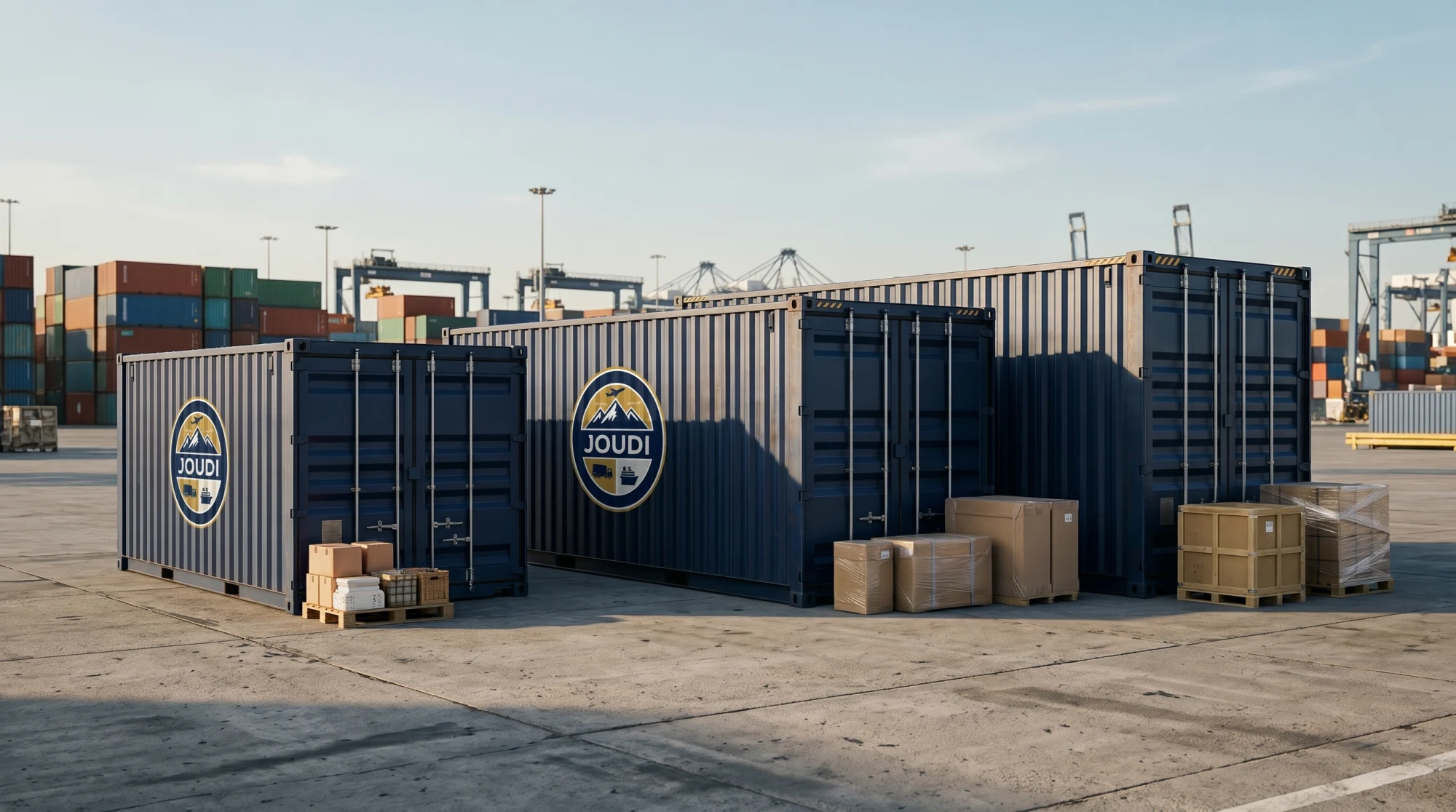
When importing goods from the UAE to Egypt, Egyptian importers often face the crucial decision of choosing between a 20ft vs 40ft container. The right choice depends on cargo volume, weight, cost efficiency, and specific logistical needs, with a 40ft container generally offering better value for larger shipments, while a 20ft container is more suitable for smaller, heavier loads or when port space is a concern.
Understanding Container Dimensions and Capacity
Before diving into the specifics, let's clarify what these container sizes mean for your cargo coming from Dubai, Abu Dhabi, or Sharjah. Both 20ft and 40ft containers are standard dry-van containers, designed to carry general cargo. There are also high-cube versions, particularly for 40ft containers, which offer an additional foot of height for even more volume.
20ft Standard Container (TEU - Twenty-foot Equivalent Unit)
- External Dimensions: Approximately 20 ft (L) x 8 ft (W) x 8.6 ft (H)
- Internal Dimensions: Roughly 19.4 ft (L) x 7.8 ft (W) x 7.9 ft (H)
- Cubic Capacity: Around 33 CBM (Cubic Meters)
- Max Gross Weight: Typically around 24,000 kg (including tare weight of the container)
- Payload Capacity: Approximately 21,500 - 22,000 kg
A 20ft container is ideal for heavy goods that don't take up much space. Think of machinery parts, raw materials like steel or aluminum, or dense manufactured products. If your shipment is heavy but compact, a 20ft container might be more cost-effective as you'll likely hit the weight limit before the volume limit.
40ft Standard Container (FEU - Forty-foot Equivalent Unit)
- External Dimensions: Approximately 40 ft (L) x 8 ft (W) x 8.6 ft (H)
- Internal Dimensions: Roughly 39.5 ft (L) x 7.8 ft (W) x 7.9 ft (H)
- Cubic Capacity: Around 67 CBM
- Max Gross Weight: Typically around 30,480 kg (including tare weight)
- Payload Capacity: Approximately 26,000 - 26,500 kg
40ft High Cube Container
- External Dimensions: Approximately 40 ft (L) x 8 ft (W) x 9.6 ft (H)
- Internal Dimensions: Roughly 39.5 ft (L) x 7.8 ft (W) x 8.9 ft (H)
- Cubic Capacity: Around 76 CBM
- Max Gross Weight: Similar to a standard 40ft container (around 30,480 kg)
- Payload Capacity: Similar to a standard 40ft container (around 26,000 - 26,500 kg)
The 40ft container, especially the high cube version, is perfect for voluminous but lighter goods. Furniture, textiles, electronics, or packaged consumer goods often fit well here. While it offers roughly double the volume of a 20ft container, the maximum weight capacity doesn't double, which is a key consideration.
Key Factors for Egyptian Importers to Consider
When shipping from the UAE to Egypt, several factors should guide your container choice:
- Cargo Volume and Weight: This is the primary driver. Measure your goods accurately. If your cargo is less than 30 CBM, a 20ft container is usually sufficient. If it's between 30 CBM and 65 CBM, a 40ft standard might be ideal. For anything above that, or if you need extra height, a 40ft high cube is likely your best bet. Always consider the weight. If your goods are very heavy, even if they don't fill a 40ft container, you might hit the weight limit for a 20ft container first.
- Cost Efficiency: Generally, the cost per cubic meter is lower for a 40ft container compared to two 20ft containers. While the base shipping rate for a 40ft container is higher than a 20ft, it's typically not double. This means if you can fill a 40ft, it's often more economical. However, port charges, handling fees, and inland transportation costs in Egypt can also vary by container size. Requesting a detailed quote from Joudi Cargo will provide the most accurate cost comparison in AED.
- Nature of Goods: Fragile items might benefit from a less dense packing, which a larger container allows. If you're shipping heavy machinery from the UAE, especially for factories in Egypt, a 20ft container might be sufficient if the dimensions fit, and its robust structure can handle the weight. For oversized or heavy machinery, Joudi Cargo also offers low-bed trailers for specialized transport within Egypt.
- Loading and Unloading Facilities: Consider the facilities at your factory or warehouse in Egypt. Can they efficiently handle a 40ft container, or is a 20ft container more manageable for their equipment and space?
- Shipping Frequency: If you have a consistent, large volume of goods, opting for 40ft containers makes sense. If your shipments are smaller and more frequent, a 20ft container might allow for more flexible scheduling and inventory management.
- Customs and Documentation: While the container size doesn't directly impact the complexity of Egypt's ACID (Advance Cargo Information Declaration) system or CargoX platform, having fewer containers to manage can streamline documentation and clearance processes. Joudi Cargo provides guidance on navigating these essential steps for smooth import into Egypt.
When to Choose a 20ft Container
- Your cargo volume is small (typically less than 30 CBM).
- Your cargo is exceptionally heavy, and you anticipate hitting the weight limit before the volume limit in a 40ft container.
- You need to ship smaller batches more frequently for inventory management.
- Your receiving facilities in Egypt have space or equipment limitations for larger containers.
When to Choose a 40ft Container (or 40ft High Cube)
- Your cargo volume is moderate to large (over 30 CBM).
- You are shipping light, voluminous goods like furniture, plastics, or textiles.
- You want to maximize cost efficiency per cubic meter of cargo.
- You have ample receiving space and equipment in Egypt.
- For very large or tall items, the 40ft high cube offers that crucial extra foot of height.
Making the right choice between a 20ft and 40ft container for your imports from the UAE to Egypt is critical for optimizing shipping costs and logistics. Whether you are a factory importing raw materials, an importer bringing in finished goods, or a supplier moving products, Joudi Cargo specializes in full-container (FCL) shipping, offering competitive rates and expert guidance. Contact Joudi Cargo today for a personalized quote and to discuss your specific needs for full-container shipping between the UAE and Egypt, including assistance with Egypt’s ACID and CargoX steps, or even land container and truck shipping to Safaga and across the GCC.